
Dunya·Panyimpenan·Warta
Nyiapkeun Panyimpenan Kentang 2026/2027: Strategi Pangeringan, Ozonasi, sareng Panurunan Kecambah
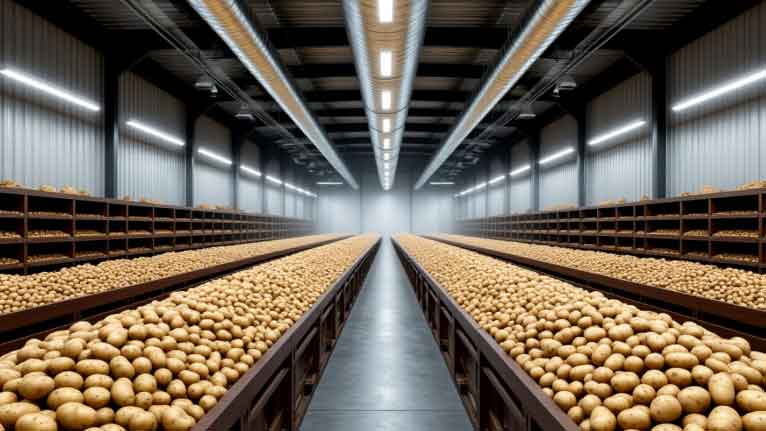
Panyawat konci
- Wet September lifting raises anthracnose risk
- Soft bacterial rot (Pectobacterium) also elevated
- Curing: 14 days at 15-18 C, 95% humidity
- Ventilation at 70 m³/h per tonne
- Ozonation cuts surface microbial load
Naha eta perkara
- Pikeun patani
- Curing is not a formality this season: wounds from a wet lift are the entry point for Pectobacterium, and suberisation is what closes them before the pile is cooled.
- Pikeun prosesor
- Ozonation lowers microbial load in the store without residues, which matters where the crop goes into processing with clean-label requirements.
Ringkesan 60 detik
Storage managers face raised risk of anthracnose and soft bacterial rot going into 2026/27, because wet conditions during September lifting combine soil moisture with harvest damage — the two things those pathogens need. The recommended answer is a curing period of 14 days at 15-18 °C and 95% relative humidity, with forced ventilation at 70 cubic metres an hour per tonne. That phase lets superficial wounds heal and suberise, forming a barrier against rot, while surface moisture is drawn off gradually. Ozonation during the same window disinfects the store atmosphere and lowers surface microbial load without leaving chemical residues.
poé 14periode pangeringan
15-18 C.suhu curing
95%relative humidity during curing
70 m³/h per tonneforced ventilation rate
Ringkesan Kentang Global
Lima carita, harga, bewara panyakit, sareng acara pangluhurna. Isuk-isuk dina dinten kerja, teu aya iklan.
Dihubungkeun dina bahan ieu
- nagara
- Dunya
- Bagean
- PanyimpenanWarta
Carita patali
Moldova·Eropa·Warta
Moldova: Patani Kentang Negeskeun Kamentrian ngeunaan Biaya Bibit sareng Panyimpenan sabab Wewengkonna Turun ka 23,000 ha
Ethiopia·Aprika·Agronomi
Étiopia: Produksi Kentang Ningkat Sapuluh Kali Lipat Ti Saprak Taun 2000 Janten 4.09 Juta Ton
Dunya·Agronomi·Panén


