
Naha Kentang Bisa Jadi Tanaman Kahiji Manusa di Mars – Wawasan tina Panalungtikan anu Didukung ku NASA
Panyawat konci
- CIP ran the experiment in 2016 with NASA support
- Peruvian desert soil used as a Mars analogue
- Martian pressure and air composition recreated
- Some varieties sprouted and began to grow
- High calorie yield per unit area is the argument
Naha eta perkara
- Pikeun patani
- The experiment is a stress test of the crop’s limits — soil conditioning and pressure control, not genetics, were the variables.
Ringkesan 60 detik
In 2016 the International Potato Center, with NASA support, tested whether potatoes could grow under Martian-like conditions. Rather than going to Mars, researchers used the Peruvian desert, whose soil closely resembles the Martian surface, and recreated Martian atmospheric pressure, air composition and environmental conditions in controlled growth chambers before planting several varieties. Some sprouted and began to grow, showing that with soil conditioning and regulation of water, temperature and air pressure, cultivation on Mars is a realistic possibility. The reason the crop is chosen over others is practical: where every square metre and drop of water counts, what matters is caloric output per unit area, and potatoes are strong on that measure. They are rich in carbohydrates, carry vitamin C and potassium, and store for relatively long periods after harvest — qualities that have made them a lifeline in wars and famines.
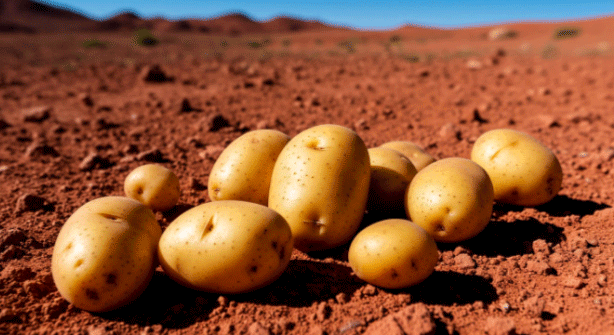
Upami umat manusa kantos ngadegkeun padumukan di Mars, pepelakan naon anu bakal dipelak heula? Fans of The Martian might recall astronaut Mark Watney surviving on potatoes, but this scenario is not merely science fiction—real scientists have been testing its feasibility. In 2016, the International Potato Center (CIP), with support from NASA, conducted a groundbreaking experiment to determine whether potatoes could grow under Martian-like conditions. Rather than traveling to the Red Planet, researchers chose the Peruvian desert—a region with soil remarkably similar to that of Mars, often dubbed “Earth’s Mars.” There, they recreated Martian atmospheric pressure, air composition, and environmental conditions in controlled growth chambers and planted several potato varieties. The results were astonishing: certain varieties actually sprouted and began to grow, demonstrating that with proper soil conditioning, water, temperature, and air pressure regulation, potatoes could indeed be cultivated on Mars. The researchers concluded that, given the right conditions, growing potatoes on the Red Planet is a realistic possibility.
Tapi naha kentang leuwih penting tibatan pepelakan séjén anu teu kaétang? Jawabanna praktis pisan. Di luar angkasa, dimana unggal méter pasagi sareng tetes cai berharga, pepelakan anu maksimalkeun kaluaran kalori per unit area penting pisan — sareng kentang unggul dina hal ieu. Sacara nutrisi, kentang beunghar karbohidrat pikeun suplai énergi anu efisien, ngandung vitamin C, kalium, sareng nutrisi mangpaat anu sanés, sareng tiasa disimpen salami waktos anu relatif lami saatos panén. Sacara historis, kentang parantos janten sumber daya hirup nalika perang sareng paceklik, ngabuktikeun résiliénsi sareng kamampuanna pikeun ngadukung populasi nalika sumber pangan sanés gagal. Upami umat manusa kantos ngawangun kota di Mars, kamungkinan ageung kentang bakal janten salah sahiji pepelakan anu munggaran dibudidayakeun — ngajantenkeun masa depan luar angkasa urang panginten langkung dikenal tibatan anu urang bayangkeun.
Ringkesan Kentang Global
Lima carita, harga, bewara panyakit, sareng acara pangluhurna. Isuk-isuk dina dinten kerja, teu aya iklan.
sumber
- International Potato Center (CIP) experiment with NASA support — described in the article
Dihubungkeun dina bahan ieu
- nagara
- Peru
- pausahaan
- International Potato Center (CIP); NASA
Carita patali

Ngali Ngaliwatan Héjo Haulm: Iraha Panén Tanpa Pangeringan Éféktif sareng Sabaraha Biayana
Toko Pinuh: Kumaha Ngadamel Penjepit Kentang Anu Nahan Panén Nepi ka Tempat Kosong


